OEM & ODM · Baigou, China · Since 2006
OEM & ODM Bag Manufacturing Services
Whether you arrive with a finished tech pack or a one-line brief, Senszx runs the same process: engineer the pattern, prove it in a free sample, then manufacture on our own 100 lines with inspection at every gate. This page explains how OEM and ODM work with us, what to send, and what to expect.
- MOQ 100 pcs
- Free sample 3-5 days
- Bulk 20 days
- BSCI & ISO certified
Bag Manufacturing Process
OEM vs ODM
Which model fits your project?
Both models share the same factory, MOQ, lead times and quality gates. The difference is who owns the design work.
| OEM - your design, our factory | ODM - our design, your brand | |
|---|---|---|
| You provide | Tech pack, patterns or a reference sample; artwork; Pantone codes | A brief: target user, price point, must-have features, brand assets |
| We provide | Pattern engineering, material sourcing, sampling, production, QC, packing | Design proposals, 3D renders, tech pack, then everything in OEM |
| Design IP | Yours, always | Transfers to you on first bulk order (written) |
| Sample time | 3-5 days | 5-7 days (includes design round) |
| Best for | Established brands with a design team | New brands, importers, retailers adding a house line |
| MOQ / lead time | 100 pcs / 20 days | 100 pcs / 20 days |
Services
Everything under one roof
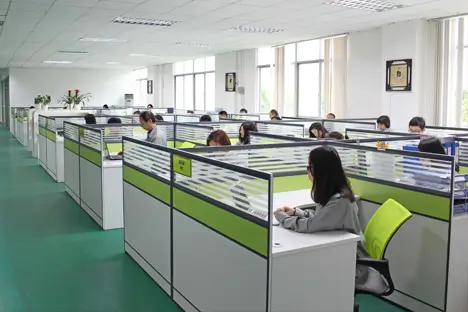
Custom manufacturing for your brand
Tech-pack to carton private-label production, with a dedicated sales engineer from first sample to shipment.
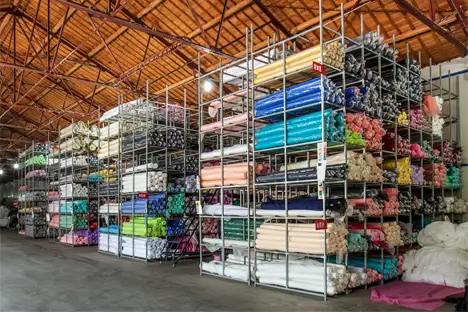
Custom fabrics
Nylon, polyester, canvas, RPET, PU and coated fabrics from audited mills, dyed to Pantone with lab-dip approval.
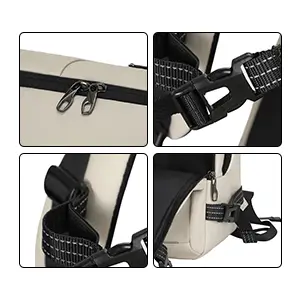
Custom zipper pulls & buckles
Logo-engraved pulls, buckles, badges and rivets in your finish - YKK, SBS, Duraflex-type hardware.
Quality assurance
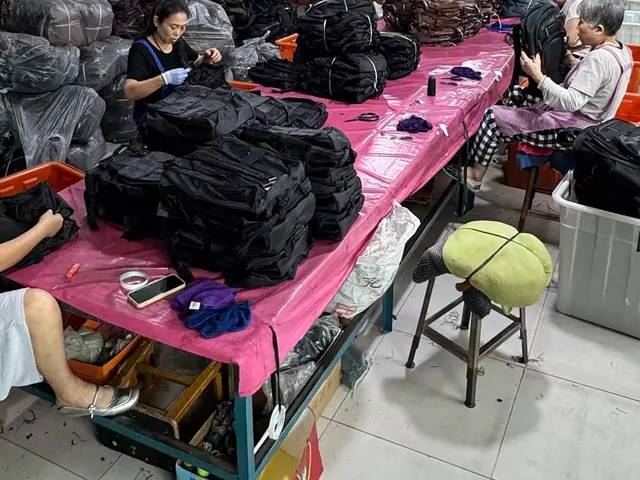
Six inspection gates from incoming fabric to AQL 2.5 final audit. Third-party inspection welcome.
Free sample
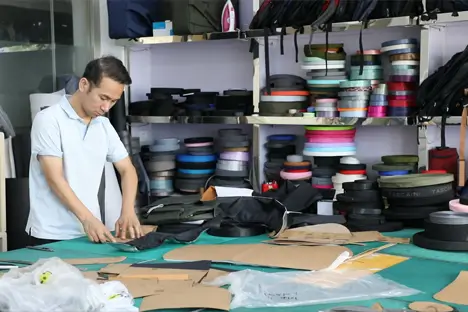
A production-grade sample in 3-5 days, on us. Revise until approved; bulk matches the signed-off sample.
Stock & private label
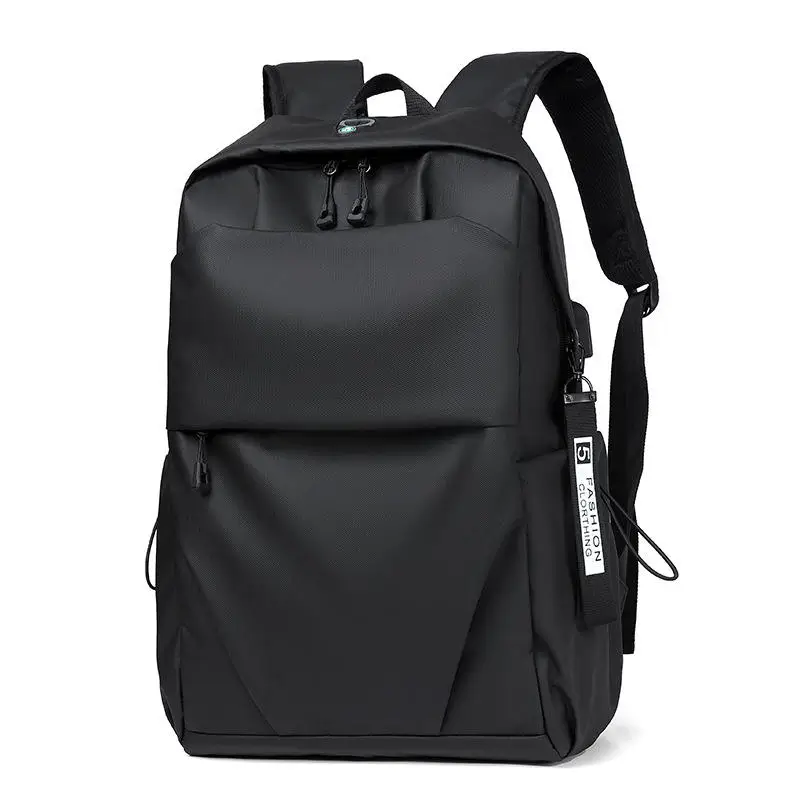
Inspected, individually packed in-stock bags that can carry your label and ship within days.
What to send
Your OEM tech-pack checklist
- Flat sketches or photos: front, back, side, interior
- Dimensions (L x W x H in cm) and target weight
- Fabric: type, denier, coating, Pantone or swatch
- Hardware: zipper brand/size, buckles, pulls, feet
- Logo artwork (vector) and placement/method
- Lining, padding, reinforcement requirements
- Packaging: poly bag, hang tag, colour box, carton marks
- Target FOB price and order quantity
- Compliance needs: REACH, Prop 65, CPSIA, Oeko-Tex
- Destination market (affects labels and sizing)
OEM & ODM guide
The complete guide to OEM and ODM bag manufacturing in China
Everything a sourcing manager, brand founder or importer needs to know before placing a first private-label bag order: how OEM differs from ODM in practice, who each model suits, where projects go wrong, how a factory engineers a bag from a brief, what testing proves, and how to run the commercial side without surprises. Written by the Senszx sales-engineering team from twenty years of orders.
What OEM and ODM actually mean for a bag order
In bag manufacturing the two terms describe who owns the design work, not who owns the brand - in both cases the finished bag carries your label. Under OEM (original equipment manufacturing) you arrive with a design: a tech pack, a set of patterns or a physical reference sample, and the factory's job is to engineer it for production and make it to specification. Under ODM (original design manufacturing) you arrive with a brief - target customer, price point, must-have features - and the factory's design team proposes the bag, produces renderings and a tech pack, and then manufactures it exactly as it would an OEM order.
Most real projects sit between the two. A buyer sends a competitor's bag and asks for "the same but with a laptop sleeve and our hardware" - that is OEM with an ODM element. A buyer sends a moodboard and a target price and asks us to propose three options - that is ODM. Senszx runs both through the same pattern room, the same lines and the same inspection gates; the only differences are the design round at the start and the written transfer of design rights on an ODM order.
OEM is a specification, ODM is a partnership
- OEM succeeds when the specification is complete and the factory follows it. ODM succeeds when the factory understands your market well enough to make good decisions on your behalf - which is why buyers should check an ODM partner's existing range and export markets before briefing.
White label is neither
- White label means putting your logo on a stock bag the factory already makes for others. It is fast and cheap but not exclusive. Senszx offers it through the stock collection, and many buyers start there before moving to a custom ODM design once a style proves itself.
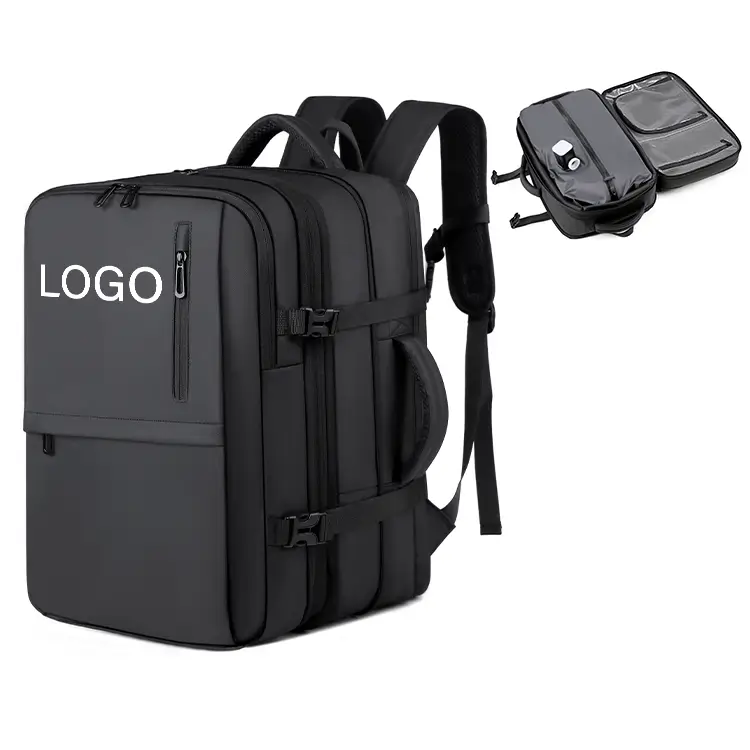
Who needs an OEM bag manufacturer - and who needs ODM
Established brands with a design team, technical designers or an existing tech-pack library need OEM: they want their design made precisely, at scale, with consistent quality and protected IP. Outdoor labels, fashion houses, school-uniform suppliers with a fixed pattern and Amazon sellers with a proven listing all fall here.
New brands, importers, wholesalers, retailers adding a house line and corporate-gift agencies usually need ODM: they know their customer and their price but not how a bag is constructed. What they need from a factory is judgement - which fabric at this price, which zipper for this market, how to hit a carry-on size - and a rendering they can show a buyer before committing to a sample.
Brand owners in fashion, outdoor and lifestyle
- Need OEM precision and IP protection. Priorities: NDA before files are shared, exact Pantone and hardware match, same operators on every re-order.
Importers and wholesalers
- Need ODM breadth: a coordinated range at three price tiers, mixed-style containers, FOB or CIF landed cost. Priorities: proven sellers, MOQ per style, weekly sailings.
School and uniform programmes
- Need OEM consistency over years: the same navy, the same embroidered crest, delivery before term. Priorities: reserved seasonal capacity, child-safety testing, pattern kept on file.
Corporate-gift and promotional agencies
- Need speed and a fixed date: branded stock styles in 7-10 days or a simple custom style in 20. Priorities: print quality, individual packing, on-time delivery above all.
Amazon and DTC sellers
- Need a differentiated SKU and FBA-compliant packing. Priorities: design exclusivity, small first run with fast re-orders, FNSKU and polybag warnings applied at the factory.
Why private-label bag manufacturing is harder than it looks
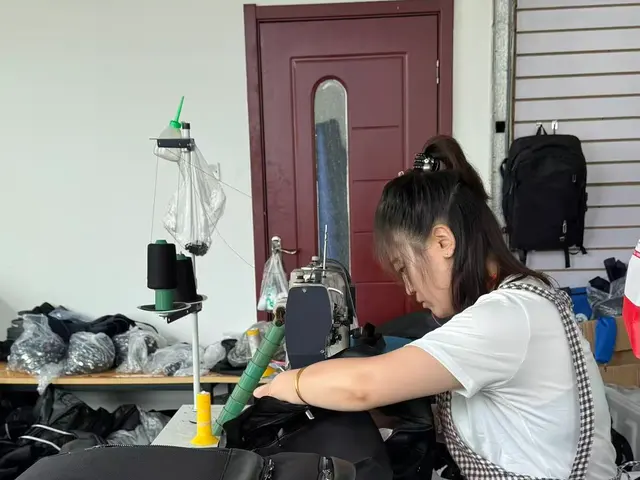
A bag looks simple - fabric, thread, a zipper - but a laptop backpack has 60-90 cut pieces, 20-30 sewing operations and a dozen purchased components, and every one is a place for a specification to drift. The failures buyers see in the market almost always trace to one of five causes below, and a good OEM factory is organised to prevent each of them.
Pattern drift between sample and bulk
- The approved sample is hand-cut by a pattern maker; bulk is cut by CNC from a digitised pattern. If the digitising step is careless, dimensions shift by a centimetre and the bag no longer meets carry-on size. We digitise before the sample is sewn so sample and bulk share one file.
Fabric substitution
- Two 600D polyesters can differ by 40 gsm and a coating. Trading companies buy the cheapest roll that matches the colour. We buy against a written spec (denier, gsm, coating weight, colour-fastness grade) and test every incoming roll.
Stress points that fail in month three
- Strap anchors, handle bases and bottom corners take repeated load. A straight stitch through fabric alone lasts a season; a double bartack over a webbing tab lasts years. Our construction standard specifies the reinforcement at every stress point.
Colour mismatch across components
- Fabric, webbing, binding, zipper tape and thread come from five suppliers. Without a shared lab-dip standard they arrive in five navies. We dye all of them against one reference and send a strike-off card with the sample.
Scaling from one perfect sample to five thousand
- A sample sewer takes an hour per bag; a line takes eight minutes. Operations must be re-sequenced, jigs made and tolerances set. Factories that subcontract sewing lose this control; we run 100 lines in-house so the pre-production meeting happens on our own floor.
How Senszx engineers a bag from your brief
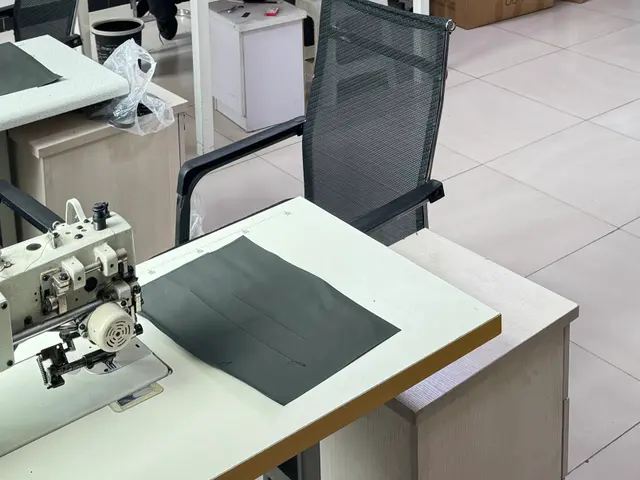
The engineering stage is where cost, durability and appearance are decided. It runs the same way for OEM and ODM - the difference is only whether the design input is your tech pack or our proposal.
1. Brief review and open questions
- A sales engineer reads your files and returns a short list of the questions that change price: quantity per colour, fabric preference or target price, logo method, destination market. We do not ask for anything that does not affect the quote.
2. Material proposal and costed BOM
- Two or three fabric and hardware options, each with a bill of materials and an FOB price at 100 / 500 / 1,000 pieces. For ODM this stage also includes photoreal renderings with your logo and colours.
3. Pattern engineering
- The pattern maker digitises the design, grades sizes if needed, and places seam allowances and reinforcement patches. Stress mapping decides where a second layer or bartack goes before a single piece is cut.
4. Sample construction (3-5 days)
- The sample is sewn from production fabric and hardware on production machines. Photos go to you first; the physical sample follows by courier for wear testing.
5. Revision and sign-off
- Unlimited revision rounds, each 3-5 days. The signed-off sample becomes the inspection standard and is sealed and kept on our QC floor for the life of the programme.
6. Pre-production meeting
- Line leader, cutting supervisor, QC lead and your sales engineer walk the sample operation by operation and agree the sequence, jigs and tolerances before the deposit-funded fabric arrives.
Fabric selection: the decision that sets 30% of the cost
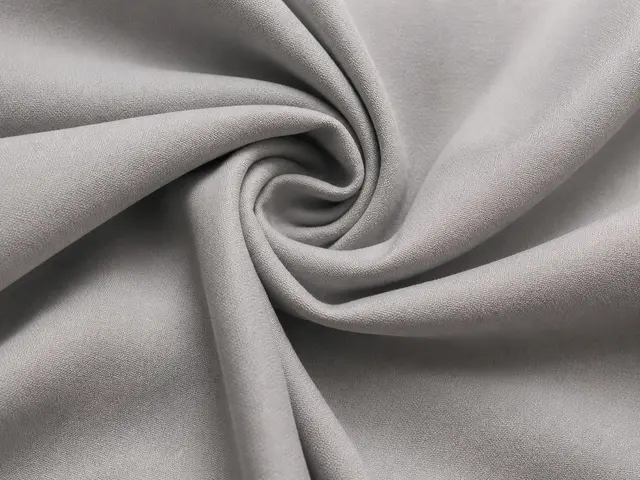
Fabric is the largest single cost in a bag and the first thing a customer touches. The choice has three axes: fibre (polyester versus nylon), denier (thread weight) and finish (coating or laminate). Polyester is cheaper, holds colour and print well and dominates school, promotional and travel bags. Nylon is lighter and stronger at the same denier and dominates outdoor, tactical and premium business bags. Denier from 210D to 1680D moves the hand feel from packable to armour-like; coatings from light PU to TPU laminate move water resistance from shower-proof to submersible.
Recycled polyester (RPET) with GRS certification now costs only 8-12% more than virgin and is increasingly a retail requirement in Europe. Cotton canvas, PU leather and waxed cotton serve fashion and heritage styles. Our fabric page lists every article we stock with weights, coatings and test data; a sales engineer will match one to your target price in the first reply.
For the Middle East
- High UV, heat and sand. Specify UV-stable dyes, lighter colours or coated finishes, and ventilated back panels. Avoid PVC backings that stiffen and crack in car-boot heat.
For Europe
- REACH compliance, GRS-recycled options, muted colourways and a tactile hand. 900D and above for the business segment.
For North America
- CPSIA and Prop 65 for children's bags; bold prints on 600D for school; 1000D nylon for the outdoor and tactical categories.
Construction, hardware and branding choices
After fabric, the components decide how a bag performs and how premium it feels. Zippers should be #5 on pockets and #8-#10 on main compartments; YKK or SBS on premium styles, with reversed coil where water resistance matters and lockable sliders on travel and anti-theft designs. Buckles, ladder-locks and hooks come in POM plastic, aluminium or zinc alloy and can carry your logo from 500 pieces. Padding is EVA or PE foam in 5-10 mm; frame sheets are PE or aluminium.
Branding is applied to cut panels before sewing, which is why in-house printing matters: placement is exact and the print does not distort over a seam. Eight methods are available - screen print, heat transfer, sublimation, embroidery, woven label, rubber or PVC patch, metal badge and debossed PU - and most bags use two or three in combination. All eight are shown with photos on the custom-manufacturing page.
Testing and validation before scale
A datasheet from a fabric mill is not proof that a bag works. Senszx tests at three levels: incoming materials, the pre-production sample, and finished goods. Materials are checked for weight, colour fastness to rubbing and light, and coating adhesion. The pre-production sample is loaded to 15 kg and dropped from one metre, its zippers cycled 5,000 times and its seams pulled to ISO 13935. Finished goods pass in-line QC every 200 pieces and a 100% final inspection, then an AQL 2.5 audit with a photo report before the balance payment is requested.
For regulated markets we arrange third-party tests through SGS, BV or Intertek - REACH, CPSIA, Prop 65, azo dyes, phthalates - and attach the reports to the shipping documents so your compliance team has them on arrival.
Climate and environment
- Bags for the Gulf are conditioned at 50 °C to check coating and adhesive stability; bags for northern Europe are flexed at -10 °C to check PU and PVC do not crack.
Validation before scale
- For orders above 3,000 pieces we recommend a 100-piece pilot run through the actual line before full production, so any operation-level issue is found on 100 bags rather than 3,000.
Costing an OEM bag: where the money goes
On a typical 600D school backpack at 1,000 pieces, fabric and lining are about 30% of the ex-works price, direct labour 35%, zippers and hardware 15%, printing and labels 8%, and packing, testing and overhead the remaining 12%. Every specification choice moves one of those bands: upgrading 600D to 1680D adds 12-18% to the total, a padded laptop sleeve 6-8%, a USB pass-through about 4%, embroidery instead of screen print 3-5% depending on stitch count.
Quantity moves labour most. A 100-piece run carries set-up time - jig making, thread changes, first-piece approval - that a 1,000-piece run amortises across ten times as many bags. That is why we quote at 100, 500 and 1,000: you can see the curve and decide where your first order sits. We do not charge tooling fees for standard construction; custom moulded hardware carries a one-time mould cost that we state up front.
Intellectual property, exclusivity and NDAs
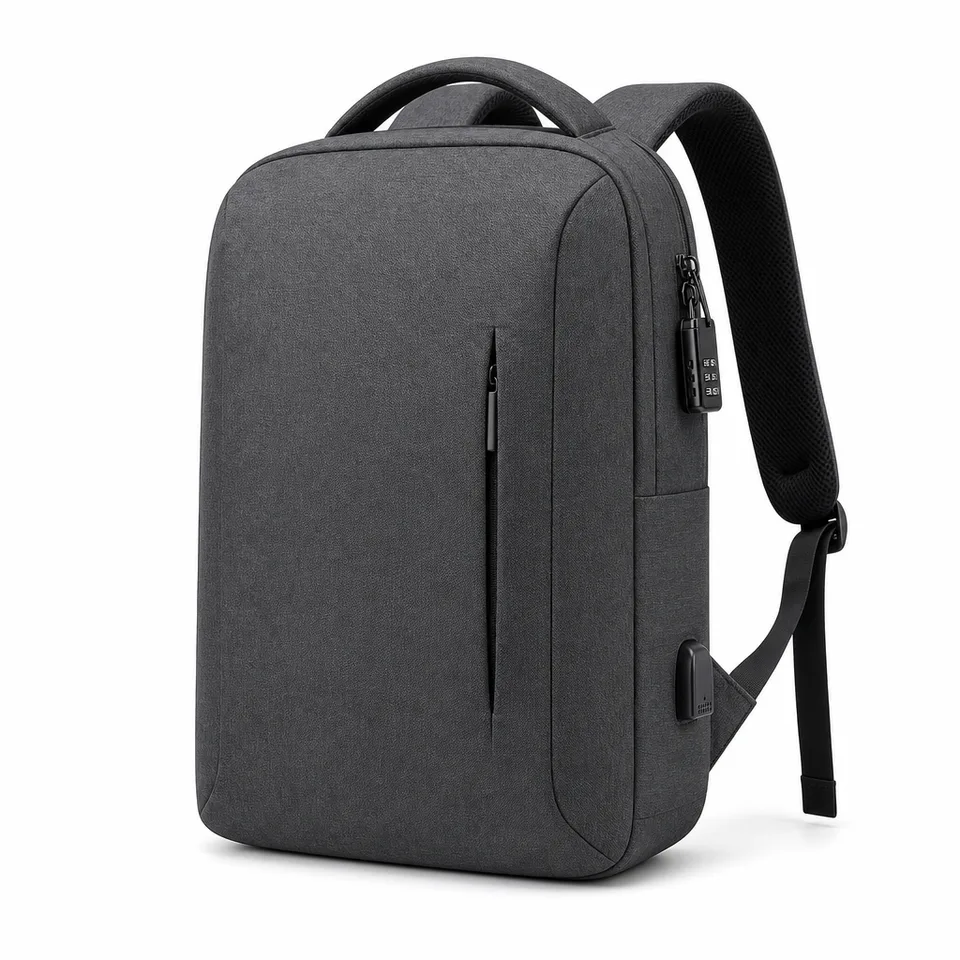
Under OEM your design is yours from the first email; we sign your NDA or provide ours before opening files, and design files are stored on an access-controlled server, not shared drives. Under ODM the design starts as ours; rights transfer to you in writing on your first bulk order and we do not offer that design to other buyers afterwards. Renderings and tech packs produced during an ODM round that does not proceed to order remain ours.
We do not reproduce third-party trademarks, licensed characters or protected designs, and we advise buyers when a reference sample is too close to a registered design to copy safely. This protects you as much as us: a customs seizure in Europe or the US is a buyer's cost.
Commercial terms: MOQ, payment, Incoterms and lead time
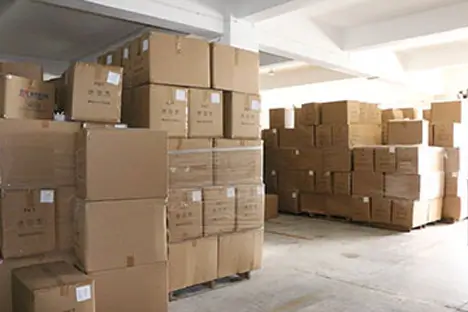
MOQ is 100 pieces per style and colour; mixed-style orders are combined on one pro-forma invoice. Payment for first orders is 30% by T/T on order confirmation and 70% against the inspection report and bill-of-lading copy; L/C at sight is accepted for orders above USD 50,000. We quote FOB Tianjin or Shanghai as standard, CIF to Jebel Ali, Dammam, Doha and European ports, and DDP to the door where the buyer prefers a single landed cost.
Lead time is 3-5 working days for a sample and 20 days for bulk after sample approval and deposit; both are written on the pro-forma invoice. Because we schedule across 100 lines, a large order does not push out a small one, and repeat orders of an approved style skip sampling entirely.
Case studies: recent OEM and ODM projects
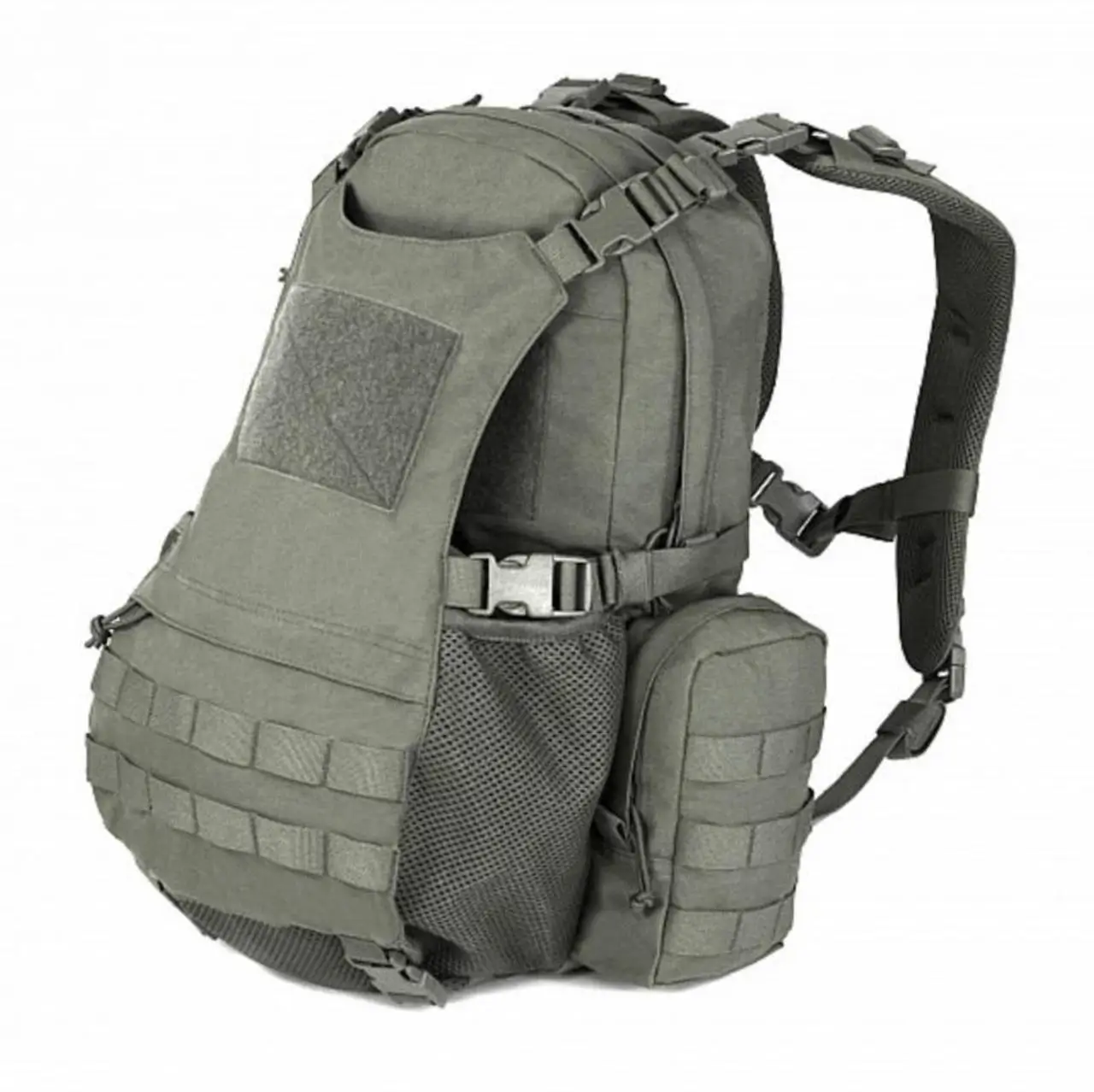
Three projects from the past twelve months illustrate how the process works in practice - one pure OEM, one pure ODM and one hybrid.
OEM: 12,000-piece school backpack programme for a stationery chain
- Complete tech pack in three sizes and four colourways. We digitised the patterns, ran one lab-dip round for all four Pantones, set up a dedicated line and shipped two drops on schedule with FNSKU labelling for the chain's online channel.
ODM: business laptop backpack for a GCC retailer
- Brief: 15.6-inch laptop, USB port, under USD 12 FOB at 1,000 pieces. We proposed 900D polyester with PU trim, moved the USB port to the side panel to protect the cable, rendered three options and delivered 1,000 pieces 22 days after sample approval.
Hybrid: insulated cooler backpack from a reference sample
- The buyer sent a competitor bag and asked for leak-proof performance at 30 L. We reverse-patterned it, upgraded the liner to 0.3 mm PEVA with welded seams, redesigned the lid closure and passed the buyer's 8-hour ice test on the second sample.
How to choose an OEM/ODM bag manufacturer: a checklist
Use these seven checks on any factory, including us. A supplier that passes all seven is a manufacturer you can build a programme on; one that fails two or more is a trading company or a workshop that will struggle at scale.
Factory or trader?
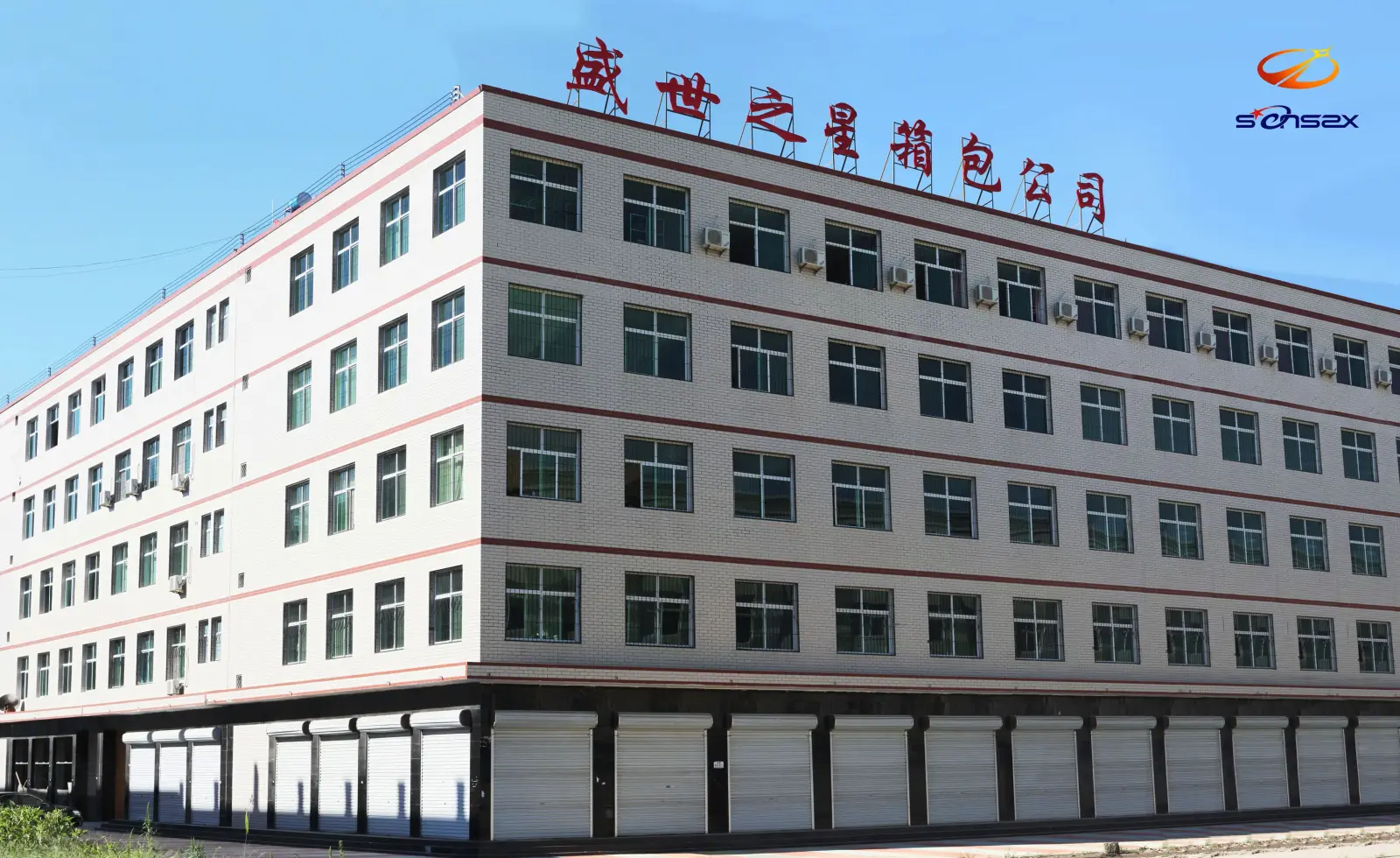
- Ask for the business licence and a live video walk-through on WhatsApp. A factory shows you the cutting floor and the lines today; a trader schedules a visit for next week.
Own pattern room?
- If patterns are outsourced, every revision adds days. Ask who cuts the sample and where.
Written inspection standard?
- Ask for the AQL level, who signs the report and whether third-party inspectors are welcome.
Lead time on the pro-forma?
- A quoted lead time should be a contractual line, not a chat message.
Certificates with numbers?
- BSCI and ISO certificates carry audit dates and certificate numbers that can be verified.
Export experience in your market?
- Ask which ports they ship to weekly and which compliance documents they have produced for your country.
Engineer on the call?
- The person answering should know denier from gsm and be able to explain why they recommend a fabric. If every answer is "yes, we can", keep looking.
From the factory
Design room, production line, order fulfilment
From Design to Sample
The new sample room: in-house designers draw the backpack and technical drawings, then sew the physical sample on the machines beside them to check structure, materials and workmanship.
Inside Our New Backpack Production Line
The newly expanded workshop: new sewing machines, one operation per station, technicians changing threads for each production requirement and team leaders coaching operators.
Custom Packing & Quality Inspection
Cartons made to the customer's spec; inspected backpacks sorted and packed by the packing team according to the customer's packing instructions.
FAQ
OEM & ODM questions
Do I need a complete tech pack to start?
Who owns the design if Senszx develops it (ODM)?
Can you sign an NDA?
Do you produce for other brands in my category?
What are the payment terms?
Can I visit the factory?
OEM & ODM · Baigou, China · Since 2006 inquiry
Start your OEM or ODM bag project
Whether you arrive with a finished tech pack or a one-line brief, Senszx runs the same process: engineer the pattern, prove it in a free sample, then manufacture on our own 100 lines with inspection at every gate. This page explains how OEM and ODM work with us, what to send, and what to expect.
Email
[email protected]Factory
Qinzheng Road No.89, New Industry Zone, Baigou Town
Baoding City, Hebei Province 074004, China